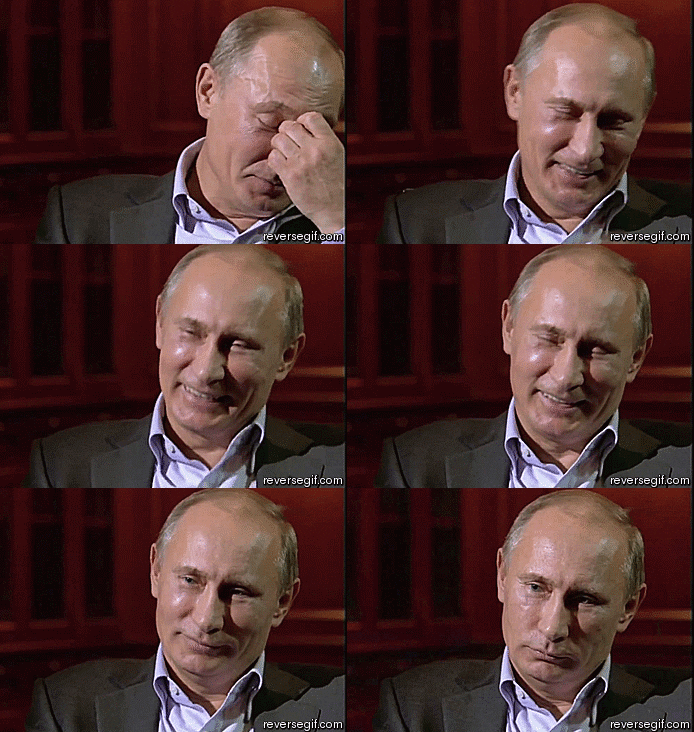


So many have come out with apparently proof that they cheated as many times as you homeboys cheat on your wives. So why is it taking so long?.
Russian doping: IOC delays decision on possible blanket ban for Rio Olympics
Russia must wait to learn if it can send a team to next month's Olympics after calls for it to be barred from the Rio Games for operating a four-year, state-sponsored doping programme.
The International Olympic Committee (IOC) said it will "explore the legal options" before deciding whether to implement "a collective ban" on all Russian competitors for the global showpiece, which starts on 5 August.
In the meantime, the IOC says it plans to re-test all Russians who competed at the 2014 Winter Olympics in Sochi.
This follows the findings of the McLaren report, which said urine samples of Russian competitors were manipulated across the "vast majority" of summer and winter Olympic sports from late 2011 to August 2015.
The IOC also said it will:
Calls for a blanket ban on Russia - from both the Olympics and Paralympics - followed the publication of the McLaren report on Monday.
The IOC says it will first "take into consideration" a ruling, to be made by the Court of Arbitration for Sport (Cas) on Thursday, on the legality of banning all of Russia's track and field athletes.
IOC president Thomas Bach said the findings of the report were a "shocking and unprecedented attack on the integrity of sport and on the Olympic Games".
Wada president Sir Craig Reedie described the "scope and scale" of the findings as a "real horror story".
He said his organisation wanted the IOC to "decline entries, for Rio 2016, of all athletes" submitted by the Russian Olympic and Paralympic committees.
Analysis
BBC Radio 5 live sports news correspondent Richard Conway:
"Is what Russia has done here so bad that it warrants a collective ban - as no Russian can be above suspicion and therefore no Russians should go to Rio?
"Or is it a case that individual sporting federations should take into account circumstances and decide for themselves if certain Russian athletes who pass the right tests then they can go? It's a very complicated area. It looks on the face of this statement that the IOC is edging towards a blanket ban.
"Russia will not take any decision about a blanket ban lying down. They want to be at the Olympics. It would be a national humiliation for them not to be. They are sporting superpowers, so they will fight on to try to make sure their athletes are there next month."
What did the McLaren report tell us?
Commissioned by Wada, it looked into claims made by Grigory Rodchenkov,the former head of Russia's national anti-doping laboratory.
He alleged he doped dozens of athletes, including at least 15 medallists, in the build-up to the Sochi Games.
He said this was the result of an elaborate plot with the Russian government, which exploited its host status to subvert the drug-testing programme.
Russia topped the table in Sochi, winning 33 medals, 13 of them gold.
Rodchenkov, now in hiding in the United States, also alleged he doped athletes before the 2012 Olympics in London, the 2013 World Athletics Championships in Moscow and the 2015 World Swimming Championships in Kazan.
How has Russia responded?
It has already suspended a number of senior sports officials following the publication of the McLaren report.
Despite his denial of any state-sponsored doping programme, sports minister Mutko told the R-Sport news agency he had suspended anti-doping advisor Natalia Zhelanova as well as Irina Rodionova, deputy head of Russia's state-funded Sports Preparation Centre, and two other officials.
McLaren said Zhelanova and Rodionova had worked closely with Russian deputy sports minister Yury Nagornykh to cover up positive tests since 2011. Nagornykh has also been suspended.
Football's world governing body Fifa will look at claims in the report that Mutko was involved in covering up positive dope tests by footballers.
Mutko is a Fifa council member, the president of the 2018 Russia World Cup organising committee, president of the Russian Football Union and a member of Uefa's executive.
Russia's track and field athletes are already barred from competing at the 2016 Olympics in Rio as a result of doping violations.
The International Association of Athletics Federations, the body that governs world athletics, voted in June to maintain a global competition ban on the All-Russia Athletic Federation (Araf).
Araf hopes to overturn the suspension and will find out by Thursday if its appeal to Cas has been successful.
Who is Dr Richard McLaren?
He is the Canadian law professor who led the independent commission that looked into allegations of state-sponsored doping in Russia.
He said his investigative team had found 580 positive tests were covered up across 30 different sports in the build-up to the 2012 Olympics in London and during the 2014 Winter Olympics in the Russian city of Sochi.
McLaren added he had "only skimmed the surface" in his 57-day investigation.
Now the IOC and Wada want him to "complete his mandate" by identifying athletes who benefited from the doping programme.
Reaction
Toni Minichiello, coach of British Olympic heptathlon champion Jessica Ennis-Hill, told BBC Radio 4 there was "no need to ban a nation".
"Who are the real victims here?" he said. "The real victims are athletes that missed out on medals. Let's ban these hundreds of athletes, re-test them all and not allow them to go to Rio or any future Olympics. That decimates a Russian team anyway.
"There needs to be a huge investment in anti-doping at major championships to make sure things don't happen again."
https://www.bbc.com/sport/olympics/36834090
Russian doping claims are 'just assertions'
Will Russia be banned from the Rio Olympics? The IOC meets later to discuss possible sanctions on Russia's athletes following yesterday's WADA report into what's described as a four-year state-sponsored doping programme.
The report concludes urine samples from Russian competitors were manipulated across the "vast majority" of summer and winter Olympic sports from 2011 to August last year.
There are some fascinating details about how Russia is said to have concealed them, including a federal security agent dressed as a sewer engineer, and swapping positive samples for frozen clean ones through a mouse hole into the testing laboratory.
But Dmitry Babich, political analyst for Sputnik International radio in Moscow, says there is "no evidence" to back up the findings.
This clip is originally from 5 live Breakfast on July 19 2016.
https://www.bbc.co.uk/programmes/p041y5sj
Russian doping: IOC delays decision on possible blanket ban for Rio Olympics
Russia must wait to learn if it can send a team to next month's Olympics after calls for it to be barred from the Rio Games for operating a four-year, state-sponsored doping programme.
The International Olympic Committee (IOC) said it will "explore the legal options" before deciding whether to implement "a collective ban" on all Russian competitors for the global showpiece, which starts on 5 August.
In the meantime, the IOC says it plans to re-test all Russians who competed at the 2014 Winter Olympics in Sochi.
This follows the findings of the McLaren report, which said urine samples of Russian competitors were manipulated across the "vast majority" of summer and winter Olympic sports from late 2011 to August 2015.
The IOC also said it will:
- Not organise or back any sports events or meetings in Russia, including the European Games, scheduled for June 2019;
- Start disciplinary action against Russian officials named in the report compiled by Dr Richard McLaren;
- Ban Russian sports minister Vitaly Mutko from the Rio Games;
- Urge McLaren to continue his work and name individual Russian cheats;
- Encourage individual sports federations to look for any Russian infringements of the World Anti-Doping Agency (Wada) code.
Calls for a blanket ban on Russia - from both the Olympics and Paralympics - followed the publication of the McLaren report on Monday.
The IOC says it will first "take into consideration" a ruling, to be made by the Court of Arbitration for Sport (Cas) on Thursday, on the legality of banning all of Russia's track and field athletes.
IOC president Thomas Bach said the findings of the report were a "shocking and unprecedented attack on the integrity of sport and on the Olympic Games".
Wada president Sir Craig Reedie described the "scope and scale" of the findings as a "real horror story".
He said his organisation wanted the IOC to "decline entries, for Rio 2016, of all athletes" submitted by the Russian Olympic and Paralympic committees.
Analysis
BBC Radio 5 live sports news correspondent Richard Conway:
"Is what Russia has done here so bad that it warrants a collective ban - as no Russian can be above suspicion and therefore no Russians should go to Rio?
"Or is it a case that individual sporting federations should take into account circumstances and decide for themselves if certain Russian athletes who pass the right tests then they can go? It's a very complicated area. It looks on the face of this statement that the IOC is edging towards a blanket ban.
"Russia will not take any decision about a blanket ban lying down. They want to be at the Olympics. It would be a national humiliation for them not to be. They are sporting superpowers, so they will fight on to try to make sure their athletes are there next month."
What did the McLaren report tell us?
Commissioned by Wada, it looked into claims made by Grigory Rodchenkov,the former head of Russia's national anti-doping laboratory.
He alleged he doped dozens of athletes, including at least 15 medallists, in the build-up to the Sochi Games.
He said this was the result of an elaborate plot with the Russian government, which exploited its host status to subvert the drug-testing programme.
Russia topped the table in Sochi, winning 33 medals, 13 of them gold.
Rodchenkov, now in hiding in the United States, also alleged he doped athletes before the 2012 Olympics in London, the 2013 World Athletics Championships in Moscow and the 2015 World Swimming Championships in Kazan.
How has Russia responded?
It has already suspended a number of senior sports officials following the publication of the McLaren report.
Despite his denial of any state-sponsored doping programme, sports minister Mutko told the R-Sport news agency he had suspended anti-doping advisor Natalia Zhelanova as well as Irina Rodionova, deputy head of Russia's state-funded Sports Preparation Centre, and two other officials.
McLaren said Zhelanova and Rodionova had worked closely with Russian deputy sports minister Yury Nagornykh to cover up positive tests since 2011. Nagornykh has also been suspended.
Football's world governing body Fifa will look at claims in the report that Mutko was involved in covering up positive dope tests by footballers.
Mutko is a Fifa council member, the president of the 2018 Russia World Cup organising committee, president of the Russian Football Union and a member of Uefa's executive.
Russia's track and field athletes are already barred from competing at the 2016 Olympics in Rio as a result of doping violations.
The International Association of Athletics Federations, the body that governs world athletics, voted in June to maintain a global competition ban on the All-Russia Athletic Federation (Araf).
Araf hopes to overturn the suspension and will find out by Thursday if its appeal to Cas has been successful.
Who is Dr Richard McLaren?
He is the Canadian law professor who led the independent commission that looked into allegations of state-sponsored doping in Russia.
He said his investigative team had found 580 positive tests were covered up across 30 different sports in the build-up to the 2012 Olympics in London and during the 2014 Winter Olympics in the Russian city of Sochi.
McLaren added he had "only skimmed the surface" in his 57-day investigation.
Now the IOC and Wada want him to "complete his mandate" by identifying athletes who benefited from the doping programme.
Reaction
Toni Minichiello, coach of British Olympic heptathlon champion Jessica Ennis-Hill, told BBC Radio 4 there was "no need to ban a nation".
"Who are the real victims here?" he said. "The real victims are athletes that missed out on medals. Let's ban these hundreds of athletes, re-test them all and not allow them to go to Rio or any future Olympics. That decimates a Russian team anyway.
"There needs to be a huge investment in anti-doping at major championships to make sure things don't happen again."
https://www.bbc.com/sport/olympics/36834090
Russian doping claims are 'just assertions'
Will Russia be banned from the Rio Olympics? The IOC meets later to discuss possible sanctions on Russia's athletes following yesterday's WADA report into what's described as a four-year state-sponsored doping programme.
The report concludes urine samples from Russian competitors were manipulated across the "vast majority" of summer and winter Olympic sports from 2011 to August last year.
There are some fascinating details about how Russia is said to have concealed them, including a federal security agent dressed as a sewer engineer, and swapping positive samples for frozen clean ones through a mouse hole into the testing laboratory.
But Dmitry Babich, political analyst for Sputnik International radio in Moscow, says there is "no evidence" to back up the findings.
This clip is originally from 5 live Breakfast on July 19 2016.
https://www.bbc.co.uk/programmes/p041y5sj