Made with Love

Low cost efficient wind power

Jasper

Senior Member
Joined
Sep 26, 2013
Messages
883
It's becoming more efficient and cheaper, unlike other ways of generating electricity.
If a tsunami or earthquake hits this, the clean up is easy.
 
BlueBalls said:
$5500 is just out of my budget range.

But in the long run how much will one safe?. Let's say over a period of 20 years. If you pay $1000 a year on hydro, that means savings of $14500.

Not such a bad deal.
 
I think it is a steal for that price but it doesn't specify what is a small home, 2000 sf?.
 
Prim0 said:
Personally, my dream home would use solar, wind and mini-hydroelectric with wood burning and bio-diesel as a backup.

Man you just described my dream home too :PEACE:
 
My uncle has two of the out West and tells me it's the best investment he ever made.
 
Germany is doing it right.

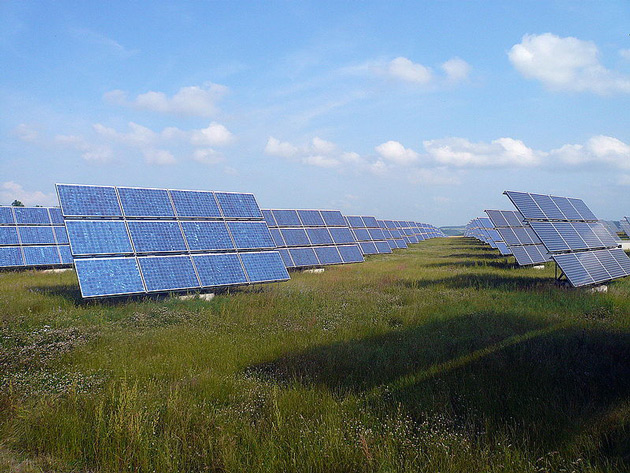
german-solar-farm-lead.jpg


Since the beginning, the commercial growth of renewable energy has been a laborious, often painful matter of government pushes, tax incentives and campaigning for greater awareness. In Germany, however, the energy market is on the cusp of evolving to the next step: An era in which the sun and the wind replace fossil fuels through the sheer, unstoppable force of the market.

The country is currently experiencing a glut of energy, thanks to the recent openings of new coal power stations (which were commissioned back when electricity was in short supply) as well as record levels of renewable generation -- especially . On sunny and windy days, the excess of electricity (which on average stands at 117 percent of peak demand) gets so big that energy prices are pushed downwards and traditional power stations are forced to cut down their running hours. A decade ago, fossil companies enjoyed a 15 percent margin on their sales, but today they make just five percent. An energy trader has informed Bloomberg that he believes that the latest coal stations to come online will make "much less money than originally thought" and "won't cover their costs."


Regulation is still at the heart of Germany's predicament, because green generators have preferential access to the grid on days when there's an overload. In other words, they're allowed to run and run, while coal-fired stations have to switch themselves off in response to the excess. However, the consequence -- which we're already seeing -- is to sap investors' interest in financing the coal industry. In turn, this means that when the country's older coal stations reach their end of life over the next decade, there's a much greater chance that they'll be replaced by green sources. Renewable energy's contribution to the grid is on target to rise to 45 percent by 2025, while coal companies are left with what one chief financial officer described as a "trail of blood" on their balance sheets. In the US, meanwhile, the birth of solar on an industrial scale is only just getting started.

https://www.engadget.com/2014/06/27/german-renewable-energy-glut/
 
Germany is doing it right.

german-solar-farm-lead.jpg


Since the beginning, the commercial growth of renewable energy has been a laborious, often painful matter of government pushes, tax incentives and campaigning for greater awareness. In Germany, however, the energy market is on the cusp of evolving to the next step: An era in which the sun and the wind replace fossil fuels through the sheer, unstoppable force of the market.

The country is currently experiencing a glut of energy, thanks to the recent openings of new coal power stations (which were commissioned back when electricity was in short supply) as well as record levels of renewable generation -- especially . On sunny and windy days, the excess of electricity (which on average stands at 117 percent of peak demand) gets so big that energy prices are pushed downwards and traditional power stations are forced to cut down their running hours. A decade ago, fossil companies enjoyed a 15 percent margin on their sales, but today they make just five percent. An energy trader has informed Bloomberg that he believes that the latest coal stations to come online will make "much less money than originally thought" and "won't cover their costs."


Regulation is still at the heart of Germany's predicament, because green generators have preferential access to the grid on days when there's an overload. In other words, they're allowed to run and run, while coal-fired stations have to switch themselves off in response to the excess. However, the consequence -- which we're already seeing -- is to sap investors' interest in financing the coal industry. In turn, this means that when the country's older coal stations reach their end of life over the next decade, there's a much greater chance that they'll be replaced by green sources. Renewable energy's contribution to the grid is on target to rise to 45 percent by 2025, while coal companies are left with what one chief financial officer described as a "trail of blood" on their balance sheets. In the US, meanwhile, the birth of solar on an industrial scale is only just getting started.

https://www.engadget.com/2014/06/27/german-renewable-energy-glut/


Why Germany is one of the biggest power house in the world.
 
I never heard of this place before:

BrightSource solar plant sets birds on fire as they fly overhead


Workers at a state-of-the-art solar plant in the Mojave Desert have a name for birds that fly through the concentrated beams of solar energy focused upward by the plant's 300,000 mirrors — "streamers," for the smoke plume that comes from birds that ignite in midair.

Federal wildlife investigators who visited BrightSource Energy's Ivanpah plant last year and watched as birds burned and fell, reporting an average of one "streamer" every two minutes, are urging California officials to halt the operator's application to build a still-bigger version.

The investigators want the halt until the full extent of the deaths can be assessed. Estimates per year now range from a low of about a thousand by BrightSource to 28,000 by an expert for the Center for Biological Diversity environmental group.

The $2.2 billion plant, which launched in February, is at Ivanpah Dry Lake near the California-Nevada border.

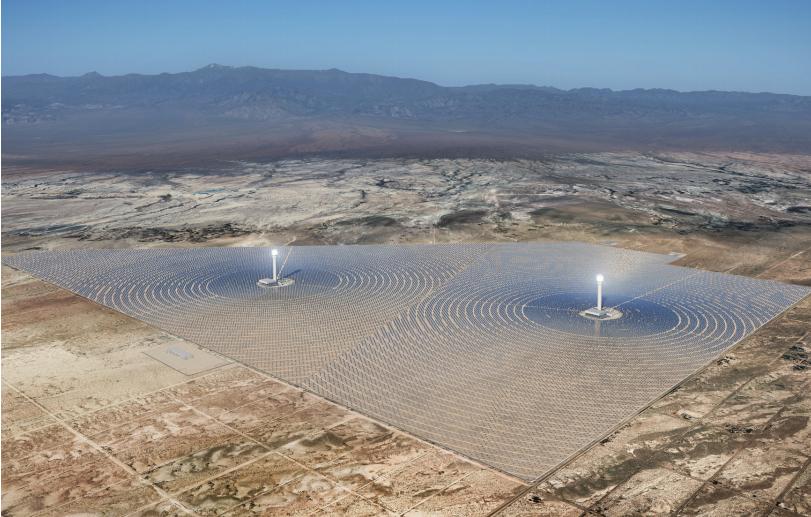
Unlike many other solar plants, the Ivanpah plant does not generate energy using photovoltaic solar panels. Instead, it has more than 300,000 mirrors, each the size of a garage door. Together, they cover 1,416 hectares.

Each mirror collects and reflects solar rays, focusing and concentrating solar energy from their entire surfaces upward onto three boiler towers, each looming up to 40 stories high. The solar energy heats the water inside the towers to produce steam, which turns turbines that generate enough electricity for 140,000 homes.

The operator says it is the world's biggest plant to employ so-called power towers. The concentrated sun rays sent up by the field of mirrors are bright enough to dazzle pilots flying in and out of Las Vegas and Los Angeles.


https://www.cbc.ca/news/technology/...-birds-on-fire-as-they-fly-overhead-1.2739512


 
I'd just stick a funnel in Guido's ass and we'd have all the wind power we would ever need! :rofl!:
 
Back
Top Bottom